
Lung care has advanced, but traditional methods can be tough. Many surgeries still need big cuts and long healing times. Patients now seek options that ease pain and allow faster recovery. Here, minimally invasive thoracoscopy offers real hope as it lets surgeons operate without large openings of traditional operations.
Learning about thoracoscopy can greatly help those with lung problems. Knowledge allows patients to better discuss options with their doctors. They find out how this procedure helps them heal quicker, leaves fewer scars, and has fewer risks. Such clear information brings comfort and boosts patient confidence.
This guide’s purpose is to present straight info on thoracoscopy benefits. Knowing this, patients can choose their treatment with better insight. They arrive for their doctor’s visits prepared, ready to ask the right questions, and know the care steps ahead. The aim is to empower patients by simplifying complex ideas so they get top care fitting their needs.
Decoding Thoracoscopy: What It Means for Your Lung Health
Thoracoscopy is a medical procedure where doctors look inside your chest. It uses a thin flexible tube, a thoracoscope, with a camera on it. This tool helps doctors see your lungs by making small cuts. The process gives all the benefits of thoracoscopy without major surgery.
Thoracoscopy serves two main purposes—diagnostic and therapeutic. Diagnostic thoracoscopy helps figure out lung issues by taking small samples. Meanwhile, therapeutic thoracoscopy lets doctors fix certain lung problems, like removing fluid. Knowing these two types isn’t hard and can ease your mind before the procedure.
Many patients now choose thoracoscopy over older surgery methods for several reasons. Key benefits include less pain, faster recovery, and smaller scars. This method achieves similar results as older surgeries without large incisions. Thoracoscopy in cancer diagnosis gives more precise results with less stress for patients.
Reasons to Embrace Thoracoscopy in Lung Treatments
Thoracoscopy is a very useful way to treat lung diseases. It helps doctors see inside the chest to find problems clearly. This procedure is especially helpful for lung cancer, pleural effusion, and pneumothorax. With thoracoscopy, doctors perform biopsies efficiently and address serious lung conditions quickly, too.
Thoracoscopy’s dual role allows it to diagnose diseases and treat them well. Doctors use it as a reliable strategy for common lung issues without needing large incisions. Many patients experience relief and improved outcomes after this procedure. Quick recovery time after surgery offers notable benefits.
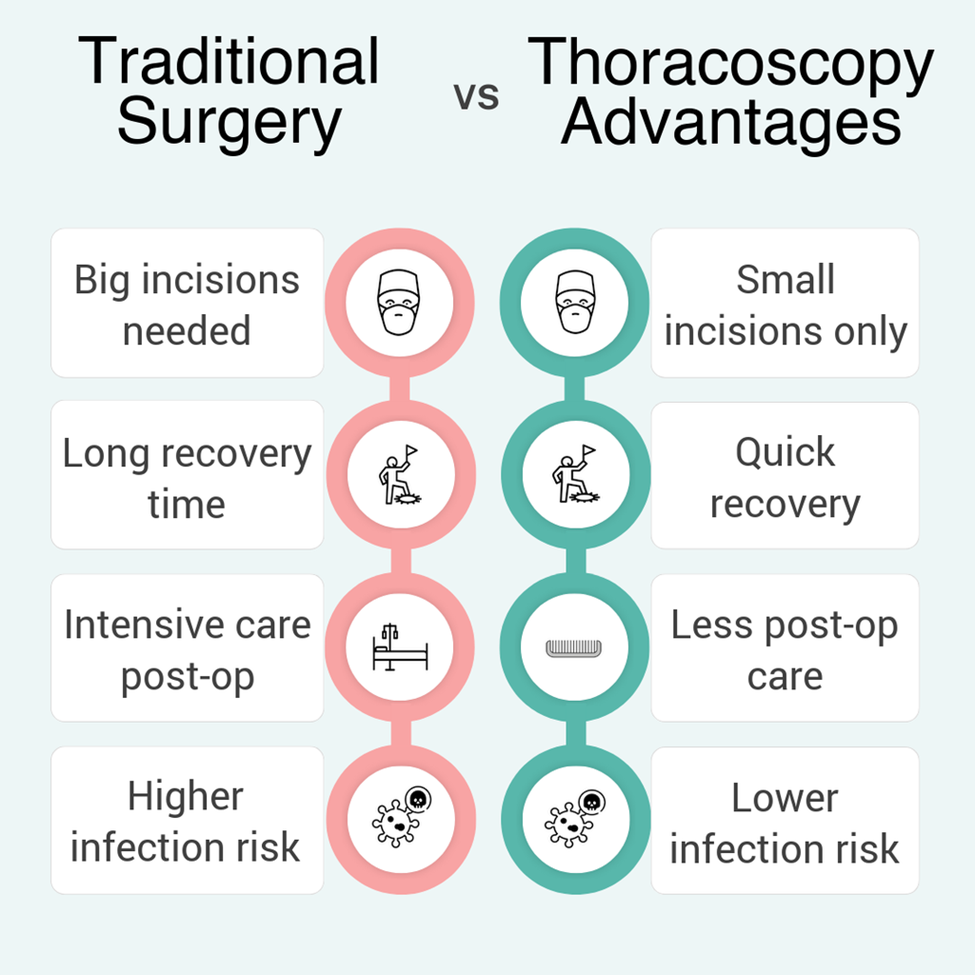
When looking at thoracoscopy vs thoracotomy, some clear differences emerge in practice. Thoracotomy needs a bigger cut, leading to slower healing times. Thoracoscopy with robotic help uses smaller cuts for a more comfortable recovery period. While thoracotomy still works in certain cases, thoracoscopy provides many benefits. Specifically, it stands out for less challenging or less extensive treatments, making it more appealing today.
Preparing for the Procedure: Navigating Pre-Thoracoscopy Guidelines
Being ready for a thoracoscopy involves some important steps beforehand. Patients might need to change their medication routine and follow specific eating rules prior. This limits risks associated with any food or medication interactions. It’s crucial for patients to adhere to these guidelines and talk to their doctor about any concerns they might have.
Understanding what happens during the thoracoscopy procedure can ease any worries. General anesthesia is usually used, which keeps the patient comfortable and pain-free. Speaking with the anesthesiologist can clear up any questions about what to expect after waking up. Knowing this can boost the patient’s trust in the process and help them cooperate smoothly during the surgery.
Following care instructions after thoracoscopy is key to recovering well. Patients should stick to their doctor’s advice to avoid risks and recover faster. This helps reduce complications and supports a favorable outcome. Staying in touch with medical staff ensures patients address any unexpected issues promptly.
The Unmatched Benefits of Thoracoscopy
The unmatched benefits of minimally invasive thoracoscopy cannot be overstated. Compared to thoracotomy, patients recover faster and feel less pain after surgery. The procedure uses smaller cuts, allowing patients to return to their lives quickly.
Using live visuals during thoracoscopy, doctors see inside the chest easily. This view improves the accuracy of diagnosing conditions like lung cancer. Precision in taking biopsy samples means better treatment plans for patients. These improved diagnostics lead to more personalized and effective patient care.
Thoracoscopy provides an effective method for treating various lung issues. From checking problems to fixing them, it serves many purposes with minimal invasion. Whether removing growths or managing pleural fluid, it meets patient needs individually. Its versatility makes it crucial in today’s chest healthcare procedures.
Post-Procedure Recovery: Returning to Everyday Life After Thoracoscopy
Recovery after thoracoscopy is usually faster than traditional surgeries like thoracotomy. This minimally invasive approach means less pain, allowing quicker return to activities. Smaller cuts lead to lower infection risk and quicker healing. Many patients resume daily routines within weeks, avoiding prolonged downtime seen in more invasive surgeries.
For post-thoracoscopy care, follow doctor’s post-operative guidance carefully for smooth recovery:
- Do: Keep incisions clean and dry to avoid any infections. Follow prescribed pain plans and go to all check-ups. Start light activities as advised, ensure rest when necessary.
- Don’t: Avoid strenuous activities too early or it might slow recovery. Steer clear of smoking and pollutants affecting lung healing.
Good nutrition and drinking enough water are beneficial for quick healing.
Typically, the recovery time after thoracoscopy takes about one to two weeks before resuming normal activities. This varies based on health conditions and specific procedures like thoracoscopy lobectomy or wedge resection. Mind medical advice and pace yourself during recovery. As routines restart, incorporate breathing exercises and light activities; they help restore strength and flexibility, ensuring a full recovery.
